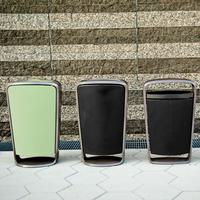
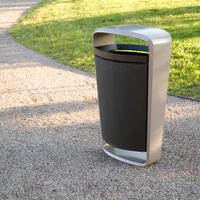
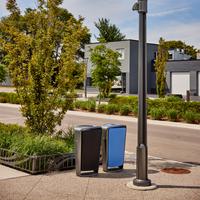
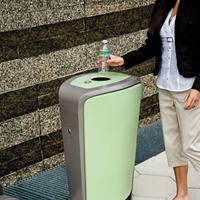
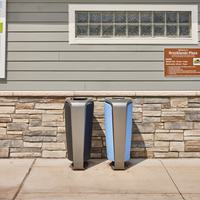
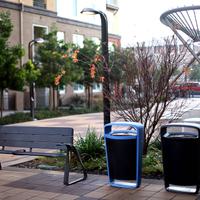
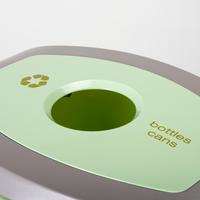
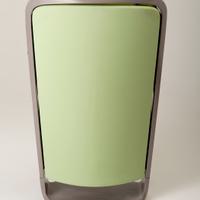
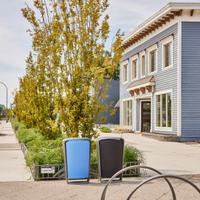
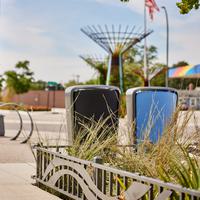
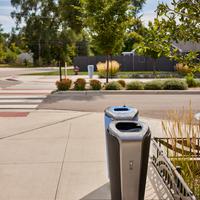
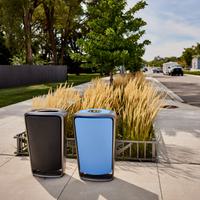
Collect litter receptacles and a companion recycling unit share a distinctive profile and provide familiar function with surprising flair. A cast aluminum ribbon frame, wide at the top and tapering toward the base, trimly wraps a rotationally molded polyethylene bin and reflects design language found throughout the Metro40 Collection.
- Features
-
Bin pivots open at a 35° angle for emptying
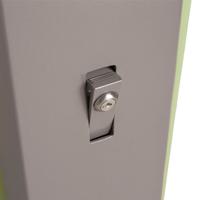
Features side latch with optional keyed lock
30-gallon capacity liner with bag hangers




If you’d like to request a quote, finish and material samples, or information about making modifications to this product, please contact your Landscape Forms representative.
All colors, textures and patterns represented on the Landscape Forms website are approximate and may vary from samples and final product.
Related Products
Articles
Since 1970, LABash has been an invaluable opportunity for landscape architecture students to connect, network, and share ideas and inspiration, but this year’s conference marked a special moment for a resilient class of students whose education experience has faced an unprecedented set of challenges.
Let’s Geaux: LABash at LSU in Baton Rouge
1% for the Planet’s goal is to significantly increase the overall amount of global dollars going to environmentally focused non-profit organizations. They connect these organizations with businesses like Landscape Forms, who then donate one percent of gross sales on certain products to one of the non-profits.
Putting Planet and People First: Landscape Forms Joins 1% for the Planet
When the Upfit adaptive outdoor structure system was initially released in 2018, its purpose was clear—to give landscape architects the tools to create tailored destinations that capitalize on a site’s underutilized outdoor spaces.
Creating the Outdoor Spaces We Need Right Now
How do we protect communities and increase their capacity for resilience while remaining in accordance with the broader goals for humanity, society and planetary systems of resilience?
Cross-Industry Experts Discuss Live: Examining the Different Scales of Resilient Design